Mobile App Development
The dating app industry has evolved into one of the most profitable segments of the mobile application market. What was once limited to simple matchmaking websites has transformed into a sophisticated digital ecosystem powered by artificial intelligence, behavioral analytics, location-based discovery, subscription models, and real-time communication.
Today, dating apps are no longer dominated exclusively by global brands. Entrepreneurs around the world are creating niche platforms for professionals, faith-based communities, mature audiences, students, and highly targeted interest groups. South Africa is experiencing the same trend as smartphone adoption continues to rise and users become increasingly comfortable forming connections online.
For founders and businesses considering entering this space, one question typically comes before every other decision: how much does it cost to build a dating app?
The answer is not as straightforward as many people expect. A basic dating application can often be developed for a few hundred thousand rand, while a feature-rich platform with artificial intelligence, video communication, advanced moderation systems, and enterprise infrastructure may require an investment exceeding several million rand.
At Paxtree, we’ve worked with businesses evaluating mobile app investments across multiple industries. One of the most common misconceptions we encounter is the assumption that dating app development costs are determined purely by coding hours. In reality, successful dating platforms require a combination of strategy, design, technology, security, scalability, and monetization planning.
This guide explores every major factor affecting dating app development cost in South Africa and provides realistic pricing expectations for entrepreneurs preparing to launch their own platform.
Why Dating Apps Continue to Be a Strong Business Opportunity
The dating industry remains attractive because it solves a universal problem. People will always seek relationships, companionship, and social connections. Technology simply provides a more efficient way to facilitate those interactions.
Unlike many applications that struggle with user retention, dating apps naturally encourage frequent engagement. Users return regularly to browse profiles, discover new matches, exchange messages, and interact with premium features. This recurring activity creates strong monetization opportunities and predictable revenue streams.
Another advantage is flexibility. Modern dating applications can target broad audiences or focus on highly specific communities. A niche platform designed for a clearly defined audience often has a better chance of success than a general-purpose app attempting to compete directly with major brands.
For South African entrepreneurs, the opportunity is particularly interesting because digital adoption continues to expand while localized dating experiences remain relatively underserved compared to larger international markets.
South Africa’s Growing Dating App Market
South Africa’s digital landscape has changed significantly over the last decade. Increased smartphone penetration, expanding internet access, and widespread use of digital payment systems have created favorable conditions for mobile-first businesses.
The country’s young population and growing urban centers contribute to demand for convenient digital platforms that simplify social interaction and relationship building.
Many entrepreneurs immediately think about competing with Tinder or Bumble. However, the most successful startups often focus on specific audiences instead of attempting to serve everyone. Platforms designed for professionals, faith communities, cultural groups, or lifestyle-based audiences can establish strong market positions without requiring millions of users.
This creates exciting opportunities for founders considering custom dating app development in South Africa.
Average Dating App Development Cost in South Africa
Before exploring specific factors, it helps to understand general pricing ranges.
| App Type | Estimated Cost (ZAR) |
|---|---|
| Basic MVP Dating App | R150,000 – R350,000 |
| Standard Dating App | R350,000 – R800,000 |
| Advanced Dating Platform | R800,000 – R1,800,000 |
| Enterprise Dating Solution | R1,800,000 – R4,500,000+ |
These estimates include design, development, testing, deployment, and project management. Actual costs vary depending on complexity and long-term objectives.
The most important takeaway is that there is no universal pricing model. Every project has unique requirements that influence the final investment.
What Determines Dating App Development Cost?
One of the biggest factors affecting cost is complexity.
A simple application focused on user registration, profile creation, basic matching, and messaging requires significantly fewer development resources than a platform incorporating artificial intelligence, video calling, and advanced recommendation systems.
The user experience also plays a major role. Modern consumers expect seamless navigation, attractive interfaces, intuitive interactions, and fast performance. Achieving these standards requires investment in professional design and user experience planning.
Backend infrastructure represents another major cost driver. Every swipe, message, profile update, and subscription transaction depends on server architecture operating behind the scenes. Applications expected to support thousands of users require different infrastructure than platforms designed to serve hundreds of thousands of members.
Scalability should never be overlooked. Building a platform that functions today is relatively easy. Building one that can support future growth without major redevelopment is considerably more challenging.
Real Example: Cost to Build a Tinder-Like App
Many founders researching dating app development costs specifically want to understand what it would take to create an application similar to Tinder.
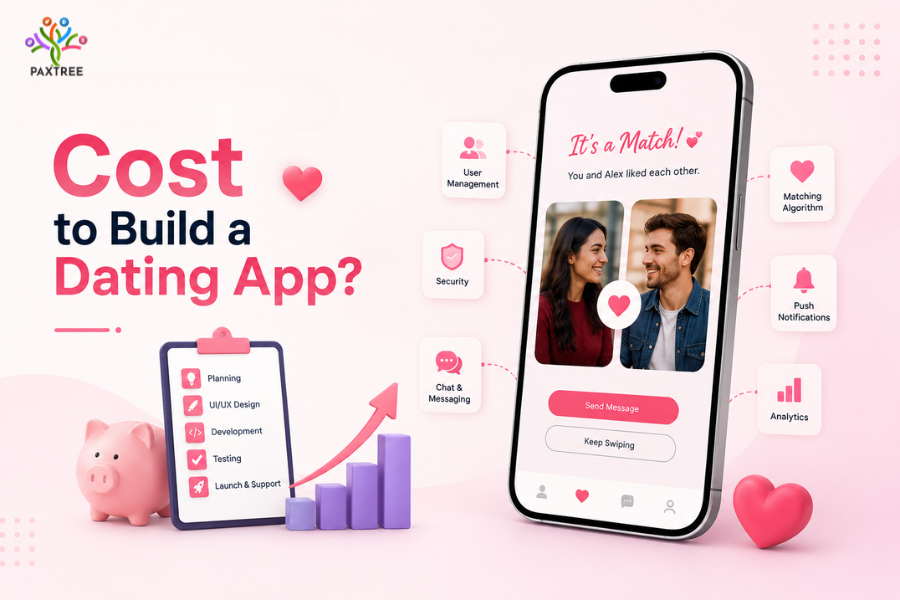
A realistic MVP version of a Tinder-style application typically includes profile creation, swipe functionality, matching systems, messaging, geolocation services, and subscription management.
| Component | Estimated Cost |
|---|---|
| UI/UX Design | R75,000 |
| Profile System | R40,000 |
| Swipe Functionality | R60,000 |
| Messaging | R120,000 |
| Geolocation | R40,000 |
| Subscription System | R50,000 |
| Admin Dashboard | R50,000 |
| Testing & QA | R30,000 |
A high-quality MVP often falls between R450,000 and R700,000.
However, adding artificial intelligence, video profiles, advanced moderation, machine learning recommendations, and enterprise-level infrastructure can push costs well beyond R2 million.
The most successful founders rarely attempt to copy Tinder feature for feature. Instead, they identify gaps in the market and create unique experiences that differentiate their platforms from existing competitors.
Dating App Development Cost by App Type
One of the biggest misconceptions among entrepreneurs is that all dating apps require similar budgets. In reality, the type of platform you decide to build can dramatically affect the overall dating app development cost.
A niche matchmaking platform for a specific audience will have different requirements than a large-scale social discovery application targeting millions of users. The features, infrastructure requirements, security standards, and monetization models all influence the final investment.
Understanding these differences before development begins helps founders make better decisions and avoid unnecessary spending.
MVP Dating App Development Cost
Most successful startups do not begin with a feature-packed platform.
Instead, they launch a Minimum Viable Product, commonly known as an MVP. The goal of an MVP is to validate demand before investing heavily in advanced functionality.
An MVP dating application focuses on solving the core problem while keeping development costs under control. Users can create profiles, discover matches, communicate with one another, and manage their accounts without being overwhelmed by unnecessary features.
For many businesses, this approach offers the fastest route to market while reducing financial risk.
A well-designed MVP dating app typically costs between R150,000 and R350,000 in South Africa depending on the complexity of the design and backend architecture.
The biggest advantage of this approach is flexibility. Instead of investing millions upfront, businesses can collect user feedback, identify engagement patterns, and expand the platform based on real-world data.
Standard Dating App Development Cost
Once market demand has been validated, many businesses move beyond the MVP stage.
A standard dating platform typically includes enhanced matching capabilities, subscription management, profile verification, advanced search filters, improved security features, and stronger moderation tools.
At this stage, user retention becomes a major focus. The objective shifts from validating the idea to building a sustainable business model.
Because of the additional functionality involved, development costs generally range between R350,000 and R800,000.
Many startups find this pricing range attractive because it balances affordability with competitive functionality.
Advanced Dating Platform Development Cost
Advanced dating applications are designed for businesses seeking stronger differentiation and deeper engagement.
These platforms frequently incorporate artificial intelligence, behavioral analysis, personalized recommendations, voice messaging, video communication, and premium monetization systems.
The development process becomes significantly more complex because each feature requires additional architecture, testing, and infrastructure planning.
Advanced dating platforms commonly cost between R800,000 and R1.8 million depending on scope.
While the investment is higher, advanced functionality often improves retention rates and increases revenue opportunities through premium subscriptions and in-app purchases.
Enterprise Dating Platform Development Cost
Enterprise-level dating applications operate at an entirely different scale.
These platforms are designed to support large user bases, extensive analytics, complex recommendation systems, multiple monetization channels, and global expansion strategies.
Scalability becomes a primary consideration. The infrastructure must handle large volumes of user activity without compromising performance or security.
Enterprise-level dating platforms frequently exceed R2 million and can reach R4.5 million or more depending on business requirements.
Although these budgets appear substantial, they are often necessary for businesses pursuing aggressive growth strategies.
Android vs iPhone vs Flutter Development Costs
One of the earliest decisions founders face is determining which platform to launch first.
This decision affects both development costs and future growth opportunities.
Many startups assume they must immediately build separate Android and iPhone applications. However, modern technologies provide more efficient alternatives.
Android App Development
Android remains one of the most widely used mobile operating systems in South Africa.
Its large user base makes it attractive for startups seeking maximum market reach.
Developing a native Android dating application generally costs between R120,000 and R900,000 depending on functionality and complexity.
While Android offers significant market potential, developing exclusively for Android may limit access to users who prefer Apple’s ecosystem.
iPhone App Development
iPhone users often generate higher revenue through subscriptions and premium purchases.
For businesses focused on monetization, iOS can be particularly attractive.
The development cost for a native iPhone dating app typically falls within a similar range to Android development.
However, building separate Android and iOS applications increases costs because each platform requires dedicated development and maintenance efforts.
Flutter Development
Flutter has become one of the most popular technologies in modern mobile app development.
Instead of creating separate applications, Flutter enables developers to build Android and iOS apps from a single codebase.
This approach offers several advantages.
Development becomes faster.
Maintenance becomes simpler.
Launch timelines become shorter.
Overall costs become lower.
For many startups, Flutter reduces development expenses by 25% to 40% compared to building two independent native applications.
This is one reason why many modern dating app development companies recommend Flutter for early-stage startups.
Tinder vs Bumble vs Custom Dating App Development Cost
Entrepreneurs often compare their ideas to popular platforms when estimating budgets.
While these comparisons can be useful, it’s important to understand that every platform follows a different business model and user experience strategy.
| App Type | Estimated Cost (ZAR) |
|---|---|
| Tinder-Style App | R350,000 – R900,000 |
| Bumble-Style App | R500,000 – R1,200,000 |
| Hinge-Style App | R500,000 – R1,500,000 |
| Niche Dating App | R250,000 – R800,000 |
| AI-Powered Dating App | R800,000 – R2,500,000+ |
The tinder app development cost is often used as a benchmark because Tinder popularized swipe-based interactions.
However, copying Tinder exactly is rarely the best strategy.
The most successful startups identify underserved audiences and build experiences tailored specifically to their needs.
This is where custom dating app development becomes particularly valuable.
How Artificial Intelligence Affects Dating App Development Cost
Artificial intelligence has transformed the dating industry over the last few years.
Users increasingly expect personalized experiences rather than simple profile browsing.
Modern platforms use AI to improve compatibility recommendations, identify fraudulent behavior, enhance safety, and increase engagement.
The addition of artificial intelligence can significantly increase development costs because these systems require sophisticated algorithms, additional infrastructure, and extensive testing.
Businesses should therefore evaluate whether AI is essential during launch or whether it can be introduced during later growth phases.
Common AI Features in Dating Apps
Artificial intelligence can improve nearly every stage of the user journey.
Matching engines analyze user behavior and preferences to improve compatibility recommendations.
Fraud detection systems help identify suspicious accounts and fake profiles.
Content moderation tools automatically review uploaded images and messages to maintain platform quality.
Recommendation engines personalize user experiences based on previous interactions.
These capabilities improve engagement but also increase development complexity.
Technology Stack and Its Impact on Development Costs
The technology stack chosen during development affects scalability, security, performance, maintenance requirements, and future expansion opportunities.
A poorly chosen stack may reduce initial costs but create expensive challenges later.
Modern dating applications commonly use technologies such as Flutter, React Native, Node.js, Laravel, Python, PostgreSQL, MongoDB, AWS, and Google Cloud.
While users rarely see these technologies directly, they influence everything from app performance to long-term maintenance expenses.
Choosing the right stack is therefore a strategic business decision rather than simply a technical one.
Is Building a Dating App Profitable?
Many entrepreneurs focus exclusively on development costs while overlooking revenue potential.
A well-executed dating platform can generate revenue through subscriptions, premium features, advertising, profile boosts, virtual gifts, and in-app purchases.
The combination of recurring subscriptions and frequent user engagement creates strong monetization opportunities.
Consider a simple example.
A dating app attracts 10,000 active users.
Five percent of users purchase a premium subscription.
The monthly subscription price is R149.
This produces 500 paying subscribers.
Monthly revenue reaches approximately R74,500.
Annual recurring revenue exceeds R890,000 before considering advertising, profile boosts, or other monetization channels.
As the user base grows, revenue scales accordingly.
This is one of the reasons investors continue to show interest in dating app businesses.
Why Dating App Development Quotes Vary So Much
Many founders receive multiple proposals from different development companies and become confused when pricing differs dramatically.
The reason is simple.
Not all development companies estimate projects the same way.
Some focus only on basic functionality.
Others include scalability planning, security implementation, advanced testing, and future growth considerations.
A platform designed for 5,000 users is fundamentally different from a platform designed for 500,000 users.
When comparing proposals, founders should focus on value, expertise, and long-term business outcomes rather than selecting the lowest price.
The cheapest solution often becomes the most expensive when performance issues, security vulnerabilities, or scalability limitations appear later.
Expert Insight From Paxtree
One pattern we consistently observe is that founders who begin with a carefully planned MVP often achieve better outcomes than those attempting to launch every feature immediately.
By focusing on essential functionality first, businesses can enter the market faster, collect valuable feedback, validate demand, and make informed decisions about future investments.
This approach reduces risk, improves resource allocation, and often leads to stronger long-term growth.
Hidden Costs That Can Increase Dating App Development Cost
When founders calculate the cost to build a dating app, they often focus only on design and development. However, the initial build is only one part of the overall investment.
Many dating app startups underestimate the costs associated with growth, maintenance, security, marketing, and infrastructure. As a result, they launch with unrealistic budgets and encounter financial challenges after release.
Understanding these hidden expenses before development begins allows businesses to plan more effectively and avoid unexpected costs.
Infrastructure and Hosting Costs
Every dating app relies on servers to process matches, store user profiles, manage subscriptions, deliver notifications, and handle messages in real time.
A newly launched platform with a few hundred users may have relatively low hosting costs. However, as engagement increases, infrastructure requirements expand rapidly.
Photo uploads, video content, real-time messaging, AI recommendations, and analytics all require server resources.
A dating app designed for long-term growth should be built on scalable cloud infrastructure from the beginning. While this may increase initial expenses, it prevents costly migrations and performance issues later.
Third-Party Service Costs
Modern dating applications rarely operate entirely on custom-built systems.
Many features depend on external providers.
Examples include payment gateways, SMS verification, email delivery services, location tracking, push notification systems, analytics platforms, and video communication services.
Although these services offer significant advantages, they introduce recurring monthly expenses that must be included in long-term budgeting calculations.
For startups, these costs may appear small initially, but they can become substantial as user numbers increase.
User Acquisition and Marketing Costs
One of the biggest reasons dating app startups fail is not poor technology. It is a lack of users.
Many founders invest heavily in development while allocating little budget to marketing.
The reality is that attracting users is often more challenging than building the platform itself.
Successful dating applications typically invest in content marketing, search engine optimization, paid advertising, social media campaigns, influencer partnerships, referral programs, and community-building initiatives.
Without a clear acquisition strategy, even the most sophisticated dating platform may struggle to gain traction.
Maintenance and Continuous Improvement
Launching an application is not the finish line.
User expectations evolve constantly. Mobile operating systems receive updates. Security threats emerge. Competitors introduce new features.
To remain competitive, dating platforms require continuous improvements.
Most businesses should expect annual maintenance costs to equal approximately 15% to 25% of their original development investment.
For example, a platform that costs R800,000 to develop may require between R120,000 and R200,000 annually for maintenance, updates, and optimization.
This is one reason why experienced dating app development companies always discuss post-launch planning during the early stages of a project.
Security Considerations for Dating Apps
Trust is one of the most important assets a dating platform can possess.
Users share personal information, photographs, private messages, and location data. Any security failure can damage a platform’s reputation and reduce user retention.
Security should therefore be viewed as a business investment rather than a technical expense.
A modern dating application should incorporate secure authentication, encrypted communication, fraud prevention mechanisms, content moderation systems, profile verification tools, and account recovery features.
Strong security not only protects users but also increases confidence in the platform and supports long-term growth.
POPIA Compliance for South African Dating Apps
Businesses operating in South Africa must also consider compliance requirements.
The Protection of Personal Information Act (POPIA) establishes rules regarding how organizations collect, process, store, and manage personal information.
Because dating applications handle sensitive user data, compliance should be addressed during the planning stage rather than after launch.
A compliant platform should provide transparency regarding data collection practices, obtain user consent where necessary, implement appropriate security measures, and give users control over their personal information.
Ignoring compliance requirements can create legal risks and negatively impact brand credibility.
How Long Does It Take to Build a Dating App?
Development timelines vary depending on complexity, team structure, and project scope.
A simple MVP can often be launched within a few months, while larger platforms require substantially more time.
The table below provides a realistic overview.
| Project Type | Estimated Timeline |
|---|---|
| MVP Dating App | 2–4 Months |
| Standard Dating App | 4–7 Months |
| Advanced Dating Platform | 7–12 Months |
| Enterprise Dating Solution | 12+ Months |
Businesses that invest in planning and strategy typically complete projects more efficiently because fewer revisions occur during development.
How to Choose the Right Dating App Development Company
Choosing the right development partner is one of the most important decisions in the entire process.
Many businesses focus exclusively on price when evaluating proposals. While budget matters, expertise, communication, scalability planning, and long-term support often have a much greater impact on project success.
A reliable dating app development company should understand more than software development. They should also understand user engagement, monetization strategies, retention challenges, security requirements, and growth planning.
Before selecting a partner, evaluate their portfolio, development methodology, communication process, and experience building scalable mobile applications.
The goal is not simply to hire developers. The goal is to find a team capable of helping transform a business idea into a sustainable digital product.
Why Businesses Choose Paxtree
At Paxtree, we believe successful applications begin with business strategy rather than feature lists.
Our approach focuses on understanding your target audience, identifying market opportunities, and creating technology solutions aligned with long-term growth objectives.
From MVP development to enterprise-scale applications, we help businesses navigate every stage of the product journey.
Our expertise includes mobile app development, user experience design, scalable backend architecture, cloud infrastructure, security implementation, and post-launch support.
Rather than simply building software, we focus on creating digital products capable of generating measurable business results.
Whether you’re planning a niche dating platform, a Tinder-inspired application, or a completely unique matchmaking solution, our team can help transform your vision into a market-ready product.
Frequently Asked Questions
How much does it cost to build a dating app in South Africa?
Most dating applications cost between R150,000 and R4.5 million depending on complexity, features, infrastructure requirements, and scalability goals.
What influences dating app development cost the most?
Feature complexity, platform selection, user experience design, backend architecture, artificial intelligence integrations, and security requirements are the biggest cost factors.
How much is Tinder app development cost?
A Tinder-like MVP generally costs between R450,000 and R900,000. Advanced versions with AI, video features, and large-scale infrastructure can exceed R2 million.
Is custom dating app development worth the investment?
Yes. Custom development provides greater flexibility, stronger branding, improved scalability, and better opportunities for differentiation compared to generic solutions.
Can I build a dating app under R300,000?
Yes, but this usually requires focusing on an MVP with essential functionality and postponing advanced features until later phases.
Is Flutter a good choice for dating app development?
For many startups, Flutter offers an excellent balance between cost efficiency, performance, and scalability.
Are dating apps profitable?
Dating platforms can be highly profitable due to recurring subscriptions, premium upgrades, advertising opportunities, and in-app purchases.
How long does dating app development take?
Most projects require between two and twelve months depending on complexity and feature requirements.
How much does dating app maintenance cost?
Annual maintenance costs generally range between 15% and 25% of the original development investment.
Do dating apps need artificial intelligence?
No. Many successful platforms launch without AI and add advanced recommendation systems after validating market demand.
Final Thoughts
The dating app industry continues to present significant opportunities for entrepreneurs willing to invest in quality products and long-term growth strategies.
Understanding the dating app development cost is about much more than estimating coding expenses. Successful platforms require thoughtful planning, strong user experiences, scalable architecture, effective monetization strategies, and ongoing investment in growth.
While a simple MVP may require a relatively modest budget, advanced platforms with artificial intelligence, premium memberships, video communication, and enterprise-level infrastructure demand significantly larger investments.
The most successful founders focus on building sustainable businesses rather than simply launching applications. They validate ideas, prioritize user experience, invest in security, and continuously improve their products based on real-world feedback.
If you’re exploring the cost to build a dating app and want a realistic estimate tailored to your business goals, Paxtree can help.
Our team works with startups, entrepreneurs, and established businesses to design, develop, and launch scalable mobile applications that create lasting value.
Ready to turn your dating app idea into a successful digital product?
Contact Paxtree today for a detailed consultation and receive a customized roadmap based on your goals, target audience, and budget.