Software Development
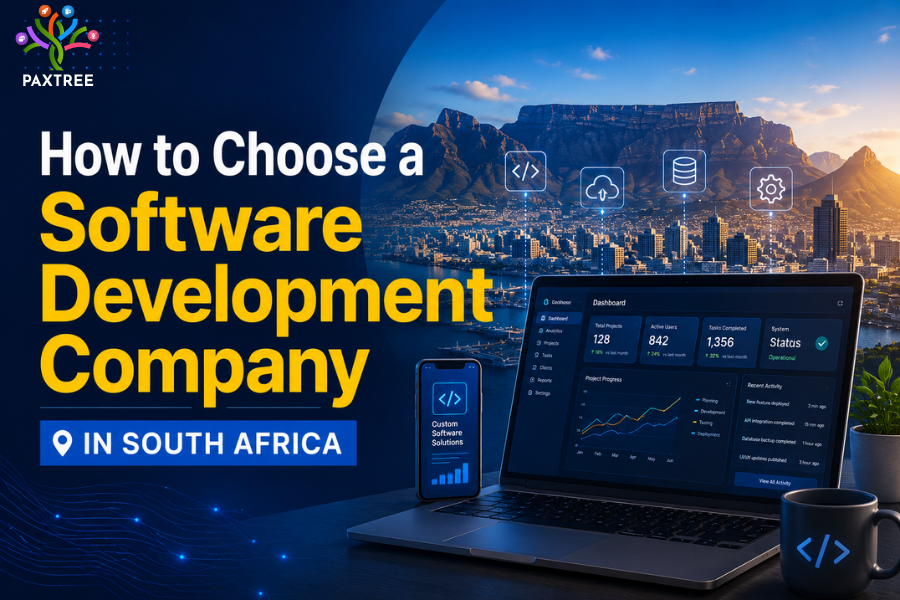
Choosing a software development company is one of the most important business decisions you’ll make. Whether you’re planning a custom CRM, ERP, AI platform, mobile application, customer portal, or enterprise software, the right technology partner can determine whether your investment delivers long-term value or becomes an expensive mistake.
Many businesses compare software development companies based only on price. While budget matters, selecting the lowest quotation often leads to missed deadlines, poor communication, limited scalability, security issues, and additional redevelopment costs later.
South Africa has become a growing technology hub, with businesses across healthcare, logistics, retail, manufacturing, finance, education, and professional services investing in digital solutions to improve efficiency and customer experience. As more software development companies enter the market, choosing the right partner has become more challenging.
This guide explains exactly how to evaluate a software development company in South Africa, what to look for during the selection process, and how to avoid common mistakes before signing a contract.
Quick Answer
The best software development company in South Africa understands your business goals before recommending technology. Look for a company with proven industry experience, transparent communication, a structured development process, strong security practices, scalable solutions, and reliable post-launch support. Choosing the right partner is about long-term business value rather than the lowest development cost.
Why Choosing the Right Software Development Company Matters
Software is no longer just a business tool. It has become a competitive advantage.
The right software solution can help your business automate repetitive tasks, improve customer service, reduce operational costs, increase employee productivity, and support future growth.
The wrong software partner, however, can lead to delayed projects, budget overruns, poor user adoption, and software that no longer meets your business requirements within a short period.
Imagine two logistics companies in Johannesburg.
Both manage thousands of deliveries every month.
The first company purchases generic software because it appears affordable. Employees still rely on spreadsheets because the platform cannot integrate with existing systems, resulting in duplicated work and reporting delays.
The second company invests in custom software designed specifically around its operations. Delivery scheduling, inventory management, invoicing, and reporting work together automatically, allowing employees to focus on customers instead of manual administration.
The difference is not simply the software itself.
It is choosing a software development company that understands the business before building the solution.
Before You Compare Software Development Companies
Many businesses request quotations before defining what they actually need.
This usually leads to inaccurate estimates, changing requirements, and higher project costs.
Before contacting software development companies, answer these important questions.
What Business Problem Are You Trying to Solve?
Technology should always solve a measurable business challenge.
Examples include:
- Automating manual processes
- Improving customer experience
- Reducing operational costs
- Increasing employee productivity
- Connecting existing business systems
- Improving reporting and decision-making
When your objectives are clear, software companies can recommend better solutions.
Who Will Use the Software?
Understanding your users helps determine the right features and user experience.
Your users may include:
- Customers
- Employees
- Sales teams
- Managers
- Suppliers
- Business partners
Each group has different requirements that influence software design.
What Systems Need Integration?
Most businesses already use multiple platforms.
Your software may need to connect with:
- ERP systems
- CRM software
- Accounting software
- Payment gateways
- Marketing platforms
- Warehouse management systems
Discussing integrations early helps avoid unexpected costs later.
How Will You Measure Success?
Before development starts, define measurable business outcomes.
For example:
- Reduce manual work by 40%
- Improve customer response times
- Increase online sales
- Reduce reporting time
- Improve employee productivity
- Eliminate duplicate data entry
Successful software projects focus on business outcomes rather than simply delivering features.
Build vs Buy Software
One of the biggest decisions businesses face is whether to purchase existing software or invest in custom software development.
The right choice depends on your business goals, growth plans, and operational complexity.
| Factor | Buy Existing Software | Build Custom Software |
| Initial Investment | Lower | Higher |
| Deployment Time | Faster | Longer |
| Customisation | Limited | Fully Customisable |
| Scalability | Depends on Vendor | Built Around Your Business |
| Ownership | Software Vendor | Your Business |
| Competitive Advantage | Limited | High |
When Existing Software Makes Sense
Existing software is often suitable when:
- Your business follows standard processes.
- Budget is limited.
- You need a solution quickly.
- Minimal customization is required.
When Custom Software Is the Better Choice
Custom software becomes the better investment when:
- Your workflows are unique.
- Existing software creates operational limitations.
- You need multiple system integrations.
- Scalability is important.
- Customer experience is a competitive advantage.
- You want complete ownership of your technology.
Businesses planning long-term growth often achieve better value from software built around their operations rather than adapting their operations to fit generic software.
Freelancer, Software Development Company, or In-House Team?
Choosing who builds your software is just as important as deciding what to build.
Each option has different strengths.
| Option | Best For | Advantages | Challenges |
| Freelancer | Small MVPs and prototypes | Lower cost and flexibility | Limited resources and higher project risk |
| Software Development Company | Most business projects | Dedicated team, structured process, ongoing support | Higher initial investment |
| In-House Team | Large organisations | Full control and internal knowledge | High recruitment and management costs |
For most businesses in South Africa, working with an experienced software development company provides the best combination of expertise, reliability, scalability, and long-term support.
10 Criteria for Choosing the Right Software Development Company
1. Industry Experience
Every industry has different challenges.
Healthcare requires secure patient data management.
Retail businesses focus on inventory and customer engagement.
Manufacturing companies need automation and production tracking.
Choose a software development company that has experience solving problems similar to yours rather than simply building websites or applications.
2. Business Understanding
A great software partner asks questions before proposing solutions.
Instead of immediately discussing programming languages, they should understand:
- Your business goals
- Current challenges
- Future growth plans
- Customer expectations
- Internal workflows
Technology should always support business strategy.
3. Technical Expertise
Review whether the company has experience with technologies relevant to your project.
This may include:
- Custom Software Development
- Mobile App Development
- Web Development
- AI Software Development
- Cloud Solutions
- API Integration
- Enterprise Applications
The best companies explain why a technology is suitable instead of recommending it simply because it is popular.
4. Communication
Successful software projects depend on clear communication.
Ask questions like:
- Who will manage the project?
- How often will meetings take place?
- Will progress reports be shared?
- Which collaboration tools are used?
Regular communication reduces misunderstandings and keeps projects on schedule.
5. Development Process
Professional software development companies follow a structured approach.
A typical process includes:
- Discovery Workshop
- Business Analysis
- UI and UX Design
- Software Development
- Quality Assurance
- User Acceptance Testing
- Deployment
- Ongoing Maintenance
A transparent process gives you confidence throughout the project and reduces unnecessary risks.
Complete Your Vendor Evaluation Before Making a Decision
By now, you should have shortlisted a few software development companies that appear to be a good fit for your project.
The next step is comparing them objectively. Instead of choosing the lowest quotation, evaluate which company is most likely to deliver long-term business value.
Below are the remaining criteria every business should assess before signing a software development contract.
6. Security and Data Protection
Security should never be treated as an optional feature.
Whether you’re building a customer portal, AI platform, ERP system, or mobile application, your software will likely handle sensitive business and customer data.
Ask potential software development companies about:
- Secure coding practices
- Data encryption
- User authentication
- Access control
- Backup and disaster recovery
- Security testing
- Compliance with data protection requirements
A company that discusses security from the beginning demonstrates a professional approach to software development.
7. Portfolio and Case Studies
A beautiful portfolio is helpful, but business results are far more important.
Instead of asking,
“Can I see your portfolio?”
Ask,
“Can you show me projects that solved business problems similar to ours?”
Look for case studies that explain:
- The client’s challenge
- The solution provided
- Technologies used
- Business improvements achieved
The best software development companies focus on outcomes rather than simply showcasing attractive designs.
8. Client Reviews and Reputation
Before choosing a software partner, research their reputation.
Positive client reviews often reveal the following:
- Communication quality
- Project management
- Technical expertise
- Ability to meet deadlines
- Ongoing support
Long-term client relationships are usually a stronger indicator of quality than marketing claims.
9. Scalability
Your software should support your business for years, not just today.
Ask questions such as:
- Can more users be added easily?
- Can additional business locations be supported?
- Will the software integrate with future systems?
- Can new features be introduced without rebuilding the platform?
Planning for future growth now can save significant redevelopment costs later.
10. Post Launch Support
- Launching software is only the beginning.
- Technology evolves continuously.
- Browsers update.
- Operating systems change.
- Business requirements grow.
A reliable software development company should provide the following:
- Bug fixes
- Security updates
- Performance improvements
- Feature enhancements
- Technical support
- System monitoring
Long-term support ensures your software continues delivering value as your business grows.
Software Development Company Evaluation Checklist
Before making your final decision, use this checklist.
- Has experience in your industry
- Understands your business goals
- Provides relevant case studies
- Has positive client reviews
- Uses a structured development process
- Follows secure development practices
- Offers transparent pricing
- Assigns a dedicated project manager
- Provides post-launch maintenance
- Builds scalable software solutions
- Clearly defines source code ownership
- Communicates regularly throughout the project
If you cannot confidently tick most of these items, continue evaluating other software development companies before making your decision.
Hidden Costs Businesses Often Overlook
Many businesses compare quotations without understanding what is included.
The cheapest proposal often excludes services that become essential later.
Consider these potential costs before signing a contract.
| Cost Area | Why It Matters |
| Discovery Workshops | Better planning reduces expensive changes later. |
| Third-Party Integrations | Payment gateways, ERP systems, CRM platforms, and APIs may require additional development. |
| Cloud Infrastructure | Hosting, storage, backups, and monitoring create ongoing costs. |
| Security Improvements | Cybersecurity requires continuous updates and testing. |
| Software Maintenance | Every application needs updates and bug fixes after launch. |
| Future Enhancements | Businesses often request new features as they grow. |
Always ask each vendor exactly what is included in their proposal to avoid unexpected expenses later.
Red Flags to Watch Before Hiring a Software Development Company
Not every software development company will be the right fit.
These warning signs deserve careful attention.
Unrealistically Low Pricing
If one proposal is significantly cheaper than the others, understand why before making a decision.
Important services such as testing, documentation, or maintenance may have been excluded.
Poor Communication
If emails take days to receive a response before the project begins, communication is unlikely to improve after signing the contract.
No Discovery Process
Professional software development begins with understanding the business.
Companies that immediately discuss development without asking about your goals may not fully understand your requirements.
No Security Discussion
If security is never mentioned during initial meetings, ask why.
Secure software should be planned from day one.
No Maintenance Plan
Software requires ongoing support.
Avoid companies that disappear once the project has been delivered.
No Client References
An experienced software development company should be able to demonstrate previous success through case studies or client references.
Why Businesses Across South Africa Choose Paxtree
At Paxtree, we believe successful software development starts with understanding your business before recommending technology.
Our team works closely with startups, SMEs, and enterprise organizations across South Africa to develop software solutions that improve efficiency, support growth, and solve real business challenges.
Whether you’re planning a custom business application, enterprise platform, AI solution, cloud application, or mobile app, we focus on delivering secure, scalable, and future-ready software designed around your business goals.
Instead of simply building software, we build long-term technology partnerships.
Final Thoughts
Choosing a software development company is about more than hiring developers. You’re selecting a technology partner who will help your business improve operations, solve challenges, and support future growth.
Take the time to understand your requirements, compare vendors using objective criteria, review their experience, and look beyond the initial development cost. The right decision today can save significant time, money, and risk in the future.
Ready to Build Software That Supports Your Business Growth?
If you’re planning a custom software project, AI-powered platform, enterprise application, or mobile app, Paxtree is here to help.
Our team will work closely with you to understand your goals, recommend the right technology strategy, and build secure, scalable software that delivers measurable business value.
Contact Paxtree today to schedule a free consultation and start building software designed for long-term success.