Mobile App Development
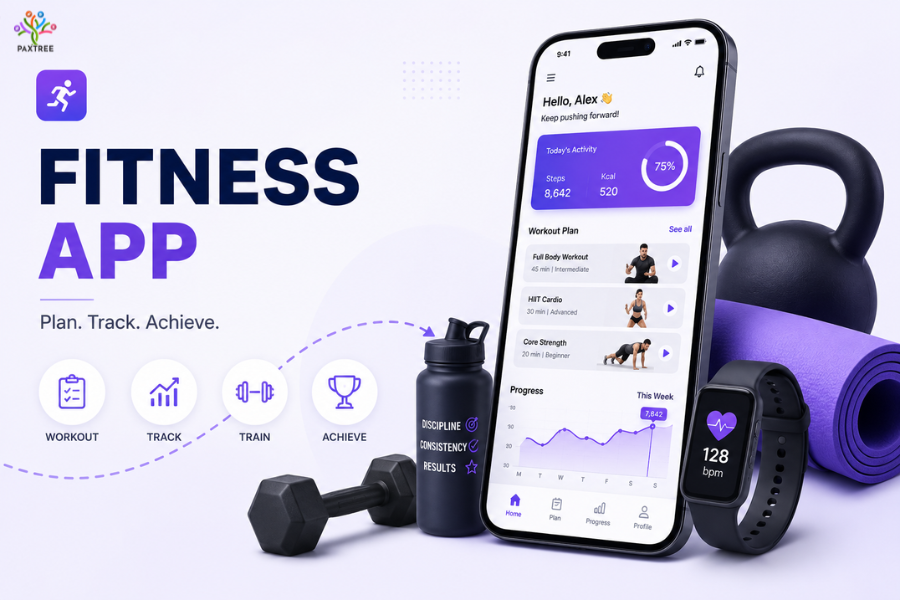
The cost to create a fitness app in 2026 typically ranges between R180,000 and R5,000,000+, depending on the app’s complexity, features, integrations, technology stack, and scalability requirements.
A basic fitness app MVP with workout tracking and user profiles may cost between R180,000 and R550,000, while a sophisticated AI-powered fitness platform featuring personalized coaching, wearable integrations, live streaming, and advanced analytics can exceed R5 million.
The final investment depends on factors such as platform selection, UI/UX design, third-party integrations, cloud infrastructure, and long-term maintenance requirements.
Whether you’re a startup founder, gym owner, fitness coach, wellness brand, or entrepreneur, understanding fitness app development costs can help you make informed decisions and avoid costly mistakes.
Introduction
The fitness industry has experienced a significant digital transformation over the last decade. Mobile technology has fundamentally changed how people approach health, exercise, nutrition, and wellness.
A fitness app can become a powerful revenue-generating asset when built correctly. Whether you’re launching a workout platform, fitness tracking solution, personal trainer app, or AI-powered wellness ecosystem, understanding development costs is the first step toward building a successful product.
Today, users expect fitness solutions that provide personalized experiences, real-time progress tracking, expert guidance, and seamless integration with wearable devices. Instead of relying solely on gyms or personal trainers, consumers are increasingly turning to fitness apps to achieve their goals from anywhere in the world.
This shift has created enormous opportunities for businesses.
From startups launching innovative fitness platforms to established gyms expanding their digital offerings, organizations are investing heavily in fitness app development to meet growing demand and generate recurring revenue.
However, one question consistently arises during the planning phase:
How much does it cost to create a fitness app in 2026?
The answer depends on several variables, including the app type, feature set, development approach, design complexity, integrations, and future scalability requirements.
In this comprehensive guide, we’ll break down everything you need to know about fitness app development costs, timelines, features, technology choices, monetization opportunities, and industry trends.
By the end of this article, you’ll have a clear understanding of what it takes to build a successful fitness app in 2026 and how to budget effectively for your project.
Fitness App Market Overview in 2026
The global fitness technology industry continues to grow rapidly as consumers place greater emphasis on health and wellness.
Several factors are driving demand for fitness applications:
- Increased smartphone adoption
- Growing use of wearable fitness devices
- Rising awareness of physical and mental health
- Demand for personalized fitness experiences
- Growth of subscription-based fitness services
- Expansion of remote coaching and virtual training
Modern users no longer want generic workout plans. They expect personalized experiences tailored to their fitness goals, lifestyle, and health conditions.
As a result, fitness apps have evolved from simple workout trackers into comprehensive digital wellness platforms that combine exercise, nutrition, coaching, community engagement, and health monitoring.
For businesses, this presents a valuable opportunity to build scalable products that generate long-term customer engagement and recurring revenue.
Fitness App Market Statistics and Industry Growth
The fitness app industry continues to be one of the fastest-growing segments within digital health and wellness.
Several trends highlight the growing market potential:
- Millions of consumers now rely on fitness applications to manage their daily health and exercise routines.
- Wearable devices such as smartwatches and fitness trackers continue to experience widespread adoption.
- AI-powered fitness coaching and personalized wellness recommendations are becoming standard user expectations.
- Subscription-based fitness platforms are creating recurring revenue opportunities for businesses.
What makes this market particularly attractive is the combination of strong consumer demand and multiple monetization opportunities.
Businesses can generate revenue through subscriptions, premium content, coaching services, marketplace commissions, corporate wellness programs, and in-app purchases.
As fitness technology continues to evolve, companies that invest in innovative and user-focused fitness applications are likely to benefit from long-term growth opportunities.
Fitness App Development Cost Comparison
The following table provides a high-level overview of fitness app development costs in 2026.
| App Type | Estimated Cost (ZAR) | Timeline | Complexity |
|---|---|---|---|
| Basic Workout App | R180,000 – R550,000 | 2-4 Months | Medium |
| Fitness Tracking App | R250,000 – R1,000,000 | 3-5 Months | Medium |
| Nutrition App | R350,000 – R1,200,000 | 4-6 Months | Medium |
| Personal Trainer App | R500,000 – R1,500,000 | 5-8 Months | High |
| Fitness Marketplace | R800,000 – R2,500,000 | 6-10 Months | High |
| AI Fitness Platform | R2,000,000 – R5,000,000+ | 8-12 Months | Very High |
These estimates include planning, design, development, testing, and deployment.
Actual costs may vary depending on your specific business requirements and feature set.
Why Fitness App Development Costs Vary So Much
One of the most common questions business owners ask is:
Why can one fitness app cost R200,000 while another costs several million rand?
The answer lies in complexity.
A basic fitness application may only include user registration, workout tracking, and progress monitoring.
An advanced fitness platform may include:
- AI-powered coaching
- Personalized workout plans
- Nutrition tracking
- Wearable integrations
- Live streaming classes
- Community features
- Gamification
- Advanced analytics
- Subscription management
- Real-time messaging
Each additional feature increases development effort, testing requirements, infrastructure needs, and long-term maintenance costs.
This is why two fitness apps can have dramatically different budgets despite targeting the same market.
The key is identifying which features are essential for your business goals and prioritizing them effectively.
Types of Fitness Apps and Their Development Costs
Workout and Exercise Apps
Workout applications are among the most popular fitness solutions available today.
These apps provide users with guided exercise programs, training schedules, workout videos, and progress tracking tools.
Common Features
- Exercise libraries
- Video tutorials
- Workout schedules
- Progress tracking
- Push notifications
- Goal setting
Estimated Cost
R180,000 – R800,000
Ideal For
- Fitness startups
- Personal trainers
- Gyms
- Wellness brands
Fitness Tracking Apps
Fitness tracking applications help users monitor daily activities and health metrics.
These apps often integrate with wearable devices and provide detailed performance insights.
Common Features
- Step counting
- Distance tracking
- Calorie monitoring
- Goal management
- Health dashboards
- Activity reports
Estimated Cost
R250,000 – R1,000,000
Ideal For
- Wellness startups
- Health brands
- Corporate wellness providers
Nutrition and Diet Apps
Nutrition applications help users manage food intake, meal plans, and dietary goals.
As personalized nutrition continues to grow in popularity, these apps are becoming increasingly valuable.
Common Features
- Calorie tracking
- Food databases
- Meal planning
- Nutrition analysis
- Barcode scanning
- Hydration tracking
Estimated Cost
R350,000 – R1,200,000
Ideal For
- Nutritionists
- Wellness brands
- Health startups
Personal Trainer Apps
Personal trainer applications allow coaches to manage clients remotely while delivering customized fitness programs.
Common Features
- Client management
- Scheduling
- Video consultations
- Progress tracking
- Workout assignments
- Messaging
Estimated Cost
R500,000 – R1,500,000
Ideal For
- Fitness coaches
- Training academies
- Independent trainers
Fitness Marketplace Apps
Marketplace platforms connect users with trainers, nutritionists, coaches, and wellness professionals.
Common Features
- Service listings
- Search filters
- Booking systems
- Payment processing
- Reviews and ratings
- User profiles
Estimated Cost
R800,000 – R2,500,000
Ideal For
- Fitness startups
- Wellness marketplaces
- Multi-vendor platforms
AI-Powered Fitness Apps
Artificial intelligence is transforming fitness experiences through personalization and automation.
These applications provide users with customized coaching and adaptive workout recommendations.
Common Features
- AI-generated workouts
- Personalized recommendations
- Virtual coaching
- Predictive analytics
- Smart progress tracking
Estimated Cost
R2,000,000 – R5,000,000+
Ideal For
- Technology startups
- Enterprise fitness brands
- Digital health companies
How Much Does a Fitness App MVP Cost?
For startups and entrepreneurs, building a minimum viable product (MVP) is often the smartest way to enter the market.
Instead of investing millions into a fully featured platform, an MVP focuses on the essential functionality required to validate your idea, attract early users, and gather real-world feedback.
This approach reduces risk, lowers initial investment, and allows businesses to improve the product based on actual user behavior.
Fitness App MVP Cost Breakdown
| MVP Type | Estimated Cost (ZAR) | Timeline |
|---|---|---|
| Basic Fitness MVP | R180,000 – R350,000 | 2-3 Months |
| Standard Fitness MVP | R350,000 – R700,000 | 3-5 Months |
| Advanced Fitness MVP | R700,000 – R1,500,000 | 5-7 Months |
Typical Features in a Basic Fitness MVP
- User registration
- User profiles
- Workout tracking
- Goal setting
- Progress dashboard
- Push notifications
Typical Features in a Standard Fitness MVP
Everything in a basic MVP plus:
- Subscription management
- Nutrition tracking
- Social sharing
- Analytics dashboard
- Payment gateway integration
Typical Features in an Advanced Fitness MVP
Everything in a standard MVP plus:
- Wearable integration
- Live coaching
- AI recommendations
- Community features
- Advanced reporting
At Paxtree, we frequently recommend an MVP-first strategy because it helps businesses launch faster while reducing unnecessary development costs.
Fitness App Development Cost by Features
The feature set is one of the biggest factors affecting the overall budget.
Every feature requires design, development, testing, and ongoing maintenance.
Below is a realistic feature-wise pricing breakdown for fitness app development in 2026.
| Feature | Estimated Cost (ZAR) |
|---|---|
| User Registration | R8,000 – R25,000 |
| User Profiles | R10,000 – R30,000 |
| Workout Library | R20,000 – R80,000 |
| Exercise Videos | R20,000 – R100,000 |
| Progress Tracking | R15,000 – R60,000 |
| Goal Tracking | R10,000 – R35,000 |
| Push Notifications | R5,000 – R20,000 |
| Social Sharing | R10,000 – R40,000 |
| Subscription System | R15,000 – R60,000 |
| Payment Gateway Integration | R10,000 – R40,000 |
| Chat Functionality | R20,000 – R80,000 |
| Community Features | R30,000 – R120,000 |
| Live Streaming | R60,000 – R250,000 |
| Wearable Integration | R40,000 – R200,000 |
| AI Recommendations | R100,000 – R500,000+ |
| Nutrition Tracking | R30,000 – R120,000 |
| Analytics Dashboard | R20,000 – R100,000 |
The final project cost depends on how these features are combined within the application.
Fitness App Development Timeline
One of the most common questions after a budget is:
“How long does it take to develop a fitness app?”
The answer depends on complexity, features, integrations, and development resources.
Average Development Timeline
| Development Phase | Timeline |
|---|---|
| Discovery & Planning | 1-2 Weeks |
| UI/UX Design | 2-4 Weeks |
| Frontend Development | 4-10 Weeks |
| Backend Development | 4-12 Weeks |
| Testing & QA | 2-4 Weeks |
| Deployment | 1 Week |
Estimated Total Project Duration
| App Type | Timeline |
|---|---|
| Basic Fitness App | 2-4 Months |
| Standard Fitness App | 4-6 Months |
| Advanced Fitness App | 6-10 Months |
| AI Fitness Platform | 8-12 Months |
Businesses that begin with an MVP often reach the market significantly faster than those attempting to launch with every feature from day one.
Fitness App Development Cost Breakdown by Development Stage
Many business owners assume development costs are only related to coding.
In reality, successful fitness applications require several phases, each contributing to the overall budget.
Discovery and Strategy
The discovery phase helps define project requirements and reduce future development risks.
Activities include:
- Market research
- Competitor analysis
- User journey mapping
- Technical planning
- Feature prioritization
Estimated Cost
R20,000 – R100,000
UI/UX Design
User experience directly impacts engagement, retention, and subscription conversion rates.
This stage includes:
- Wireframes
- User flows
- Interactive prototypes
- Visual design
Estimated Cost
R30,000 – R200,000
Frontend Development
Frontend development focuses on everything users see and interact with.
Examples include:
- Navigation
- Dashboards
- User profiles
- Workout screens
- Progress tracking
Estimated Cost
R100,000 – R600,000
Backend Development
The backend serves as the foundation of the application.
Responsibilities include:
- User management
- Databases
- APIs
- Analytics
- Payment processing
- Cloud infrastructure
Estimated Cost
R150,000 – R800,000
Testing and Quality Assurance
Comprehensive testing ensures reliability across devices and operating systems.
Testing includes:
- Functional testing
- Performance testing
- Security testing
- Device compatibility testing
Estimated Cost
R30,000 – R150,000
Launch and Deployment
Deployment involves publishing the application and configuring production environments.
Estimated Cost
R10,000 – R50,000
How Much Does It Cost to Maintain a Fitness App?
Launching a fitness app is only the beginning.
To remain competitive and provide a seamless user experience, ongoing maintenance is essential.
A good rule of thumb is to allocate approximately 15% to 20% of your initial development cost annually for maintenance and updates.
Annual Maintenance Cost Examples
| Initial Development Cost | Annual Maintenance Budget |
|---|---|
| R300,000 | R45,000 – R60,000 |
| R800,000 | R120,000 – R160,000 |
| R2,000,000 | R300,000 – R400,000 |
| R5,000,000 | R750,000 – R1,000,000 |
Maintenance Typically Includes
- Bug fixes
- Performance optimization
- Security updates
- Operating system compatibility updates
- Cloud infrastructure management
- Feature enhancements
- User support
Many businesses underestimate maintenance costs during planning, which can lead to challenges after launch.
Planning for long-term support from the beginning helps ensure sustainable growth.
Factors Affecting Fitness App Development Costs
Several variables influence the final cost of a fitness application.
Understanding these factors helps businesses make smarter budgeting decisions.
Platform Selection
Developing for both Android and iOS generally requires more resources than targeting a single platform.
Cross-platform frameworks can help reduce costs while maintaining broad market reach.
Design Complexity
A simple interface costs significantly less than a highly customized user experience with advanced animations and interactive elements.
Modern fitness applications often prioritize design because user engagement directly impacts retention.
Third-Party Integrations
Many fitness apps integrate with:
- Payment gateways
- Analytics tools
- Fitness wearables
- Maps
- Cloud services
- Social media platforms
Each integration adds development effort and testing requirements.
Wearable Device Integration
Connecting with smartwatches and fitness trackers increases both complexity and development costs.
Users increasingly expect compatibility with:
- Smartwatches
- Fitness bands
- Heart rate monitors
- Health tracking devices
This functionality often becomes a key competitive advantage.
Artificial Intelligence Features
AI-powered fitness experiences are becoming increasingly popular.
Examples include:
- Personalized workouts
- Smart recommendations
- Progress prediction
- Virtual coaching
While AI improves user engagement, it also increases development and infrastructure costs.
Scalability Requirements
A fitness app designed for 500 users requires very different infrastructure compared to one supporting 500,000 users.
Scalability planning affects:
- Backend architecture
- Database design
- Cloud hosting
- Performance optimization
Businesses with ambitious growth plans should account for scalability from the start.
Security and Privacy Requirements
Fitness applications often collect personal and health-related information.
Strong security measures are essential to protect user data and maintain trust.
Security investments typically include:
- Data encryption
- Secure authentication
- Cloud security measures
- Privacy controls
These requirements can impact both development and maintenance budgets.
Why Feature Prioritization Matters
One of the biggest reasons projects exceed budget is feature overload.
Businesses often try to build every possible feature before launch.
A more effective approach is to
- Identify core functionality
- Launch an MVP
- Collect user feedback
- Add advanced features gradually
This approach reduces risk while improving return on investment.
Key Takeaway
The cost of fitness app development is influenced by much more than coding alone.
Features, integrations, design quality, scalability, security, AI capabilities, and maintenance all contribute to the final budget.
Businesses that understand these cost drivers can make smarter investment decisions and build products that are positioned for long-term success.
Popular Fitness Apps and Their Estimated Development Costs
One of the easiest ways to understand fitness app development costs is by looking at the functionality behind popular fitness applications.
While exact development costs are rarely disclosed publicly, experienced development teams can estimate costs based on the features, infrastructure, integrations, and complexity involved.
Fitbit-Like Fitness App
Fitness tracking applications similar to Fitbit focus on helping users monitor physical activity, health metrics, and fitness goals.
Core Features
- Step tracking
- Calorie tracking
- Activity monitoring
- Goal setting
- Sleep tracking
- Wearable device integration
- Health analytics dashboard
Estimated Development Cost
R450,000 – R1,200,000
Estimated Timeline
4-6 Months
MyFitnessPal-Like App
Nutrition and diet applications require extensive food databases and advanced tracking capabilities.
Core Features
- Calorie counting
- Food database
- Barcode scanning
- Meal planning
- Nutrition insights
- Goal tracking
- Personalized recommendations
Estimated Development Cost
R600,000 – R1,500,000
Estimated Timeline
5-7 Months
Nike Training Club-Like App
Workout-focused applications deliver guided exercise programs and personalized training plans.
Core Features
- Workout videos
- Training plans
- Exercise library
- User progress tracking
- Push notifications
- Community engagement
Estimated Development Cost
R700,000 – R2,000,000+
Estimated Timeline
6-8 Months
Fitness Marketplace App
Marketplace platforms connect users with trainers, nutritionists, and fitness professionals.
Core Features
- User profiles
- Trainer listings
- Booking management
- Payments
- Ratings and reviews
- Messaging
Estimated Development Cost
R800,000 – R2,500,000
Estimated Timeline
6-10 Months
AI Fitness Coach Platform
AI-powered applications represent the future of digital fitness.
Core Features
- AI-generated workouts
- Personalized recommendations
- Virtual coaching
- Predictive analytics
- Progress forecasting
- Smart nutrition suggestions
Estimated Development Cost
R2,000,000 – R5,000,000+
Estimated Timeline
8-12 Months
Technology Stack for Fitness App Development
The technology stack you choose directly impacts development costs, scalability, performance, maintenance, and future growth.
At Paxtree, technology selection is based on business goals, user expectations, scalability requirements, and budget.
Frontend Technologies
Modern fitness applications commonly use the following:
These frameworks allow businesses to launch on Android and iOS using a shared codebase, reducing development time and cost.
Backend Technologies
Popular backend technologies include:
- Node.js
- Firebase
- Python
- .NET
Backend systems manage:
- User accounts
- Databases
- Analytics
- Notifications
- Payment processing
- APIs
Cloud Infrastructure
Most modern fitness applications rely on cloud platforms for scalability and reliability.
Common cloud solutions include:
Cloud infrastructure supports:
- Data storage
- Video streaming
- User authentication
- Analytics
- Real-time synchronization
Wearable Device Integrations
Users increasingly expect connectivity with wearable devices.
Common integrations include:
- Apple Watch
- Fitbit
- Garmin
- Samsung Galaxy Watch
These integrations improve user engagement while providing valuable fitness data.
How Fitness Apps Make Money
Before investing in fitness app development, businesses should understand potential revenue streams.
Successful fitness applications rarely rely on a single monetization strategy.
Instead, they combine multiple revenue models.
Subscription Plans
Subscriptions remain the most popular monetization model.
Users pay monthly or annual fees to access premium features.
Benefits include:
- Predictable revenue
- Higher customer lifetime value
- Strong scalability
Premium Content
Businesses can charge users for:
- Advanced workout plans
- Nutrition programs
- Specialized training courses
- Exclusive video content
Premium content creates additional revenue opportunities without significantly increasing operational costs.
Personal Coaching Services
Many fitness applications allow trainers to offer one-on-one coaching.
Revenue can be generated through:
- Video consultations
- Personalized plans
- Progress reviews
- Accountability coaching
Marketplace Commissions
Marketplace platforms earn commissions whenever users book services through the app.
Examples include:
- Trainer bookings
- Nutrition consultations
- Fitness assessments
This model works particularly well for multi-vendor fitness ecosystems.
In-App Purchases
Additional revenue opportunities include:
- Fitness challenges
- Workout packs
- Meal plans
- Digital products
Corporate Wellness Programs
Organizations increasingly invest in employee wellness initiatives.
Fitness applications can generate recurring enterprise revenue by offering:
- Corporate memberships
- Wellness tracking
- Team fitness challenges
- Employee engagement programs
Is Fitness App Development Worth the Investment in 2026?
One of the most important questions businesses ask is whether fitness app development provides a worthwhile return on investment.
For many companies, the answer is yes.
The global shift toward digital wellness continues to create opportunities for businesses that deliver value-driven fitness experiences.
Growing Consumer Demand
Consumers are actively looking for solutions that help them:
- Stay healthy
- Track fitness goals
- Improve nutrition
- Monitor progress
- Access expert guidance
This demand creates a large and growing user base.
Recurring Revenue Opportunities
Unlike traditional businesses that rely on one-time purchases, fitness apps can generate recurring revenue through:
- Subscriptions
- Coaching services
- Premium content
- Corporate programs
This recurring revenue model often leads to stronger long-term profitability.
Customer Retention Benefits
Fitness applications encourage frequent engagement.
Users may interact with the app daily through:
- Workout tracking
- Meal logging
- Progress monitoring
- Challenges
- Notifications
Higher engagement often leads to stronger customer retention.
Global Scalability
A successful fitness app can reach users worldwide.
Unlike physical fitness centers, digital platforms are not restricted by geography.
This creates significant growth potential.
Valuable User Insights
Fitness applications generate data that helps businesses understand user behavior.
These insights can improve:
- Product development
- Marketing strategies
- Customer engagement
- Retention initiatives
Fitness App Development Trends in 2026
Businesses planning a fitness application should understand emerging industry trends.
These trends influence user expectations and can provide competitive advantages.
AI-Powered Fitness Coaching
Artificial intelligence is rapidly changing the fitness industry.
AI systems can now provide:
- Personalized workouts
- Smart recommendations
- Progress analysis
- Adaptive training plans
Users increasingly expect personalized experiences rather than generic workout programs.
Wearable Device Ecosystems
Wearable technology continues to grow.
Fitness applications that integrate with health tracking devices often achieve higher engagement and retention rates.
Real-Time Health Monitoring
Users increasingly want access to live health insights.
Examples include:
- Heart rate monitoring
- Sleep tracking
- Recovery analysis
- Activity tracking
This trend is particularly important for health-focused fitness applications.
Voice-Based Fitness Experiences
Voice-guided workouts are becoming increasingly popular.
Benefits include:
- Hands-free interaction
- Better workout focus
- Enhanced accessibility
Gamification
Gamification helps increase user engagement.
Popular examples include:
- Achievement badges
- Leaderboards
- Rewards
- Challenges
- Streak tracking
These features encourage long-term participation.
Personalized Nutrition Planning
Nutrition is becoming a core component of modern fitness applications.
Many platforms now provide:
- Meal recommendations
- Calorie targets
- Nutrition analysis
- Dietary planning
Combining fitness and nutrition often improves user outcomes and retention.
Community-Driven Fitness Platforms
Social interaction remains a powerful motivator.
Users increasingly value:
- Fitness communities
- Group challenges
- Accountability partnerships
- Shared achievements
Community features often contribute significantly to retention rates.
Expert Insight from Paxtree
The most successful fitness applications in 2026 will not necessarily be the ones with the largest feature lists.
Instead, they will be the platforms that solve specific user problems effectively while delivering engaging and personalized experiences.
Businesses that focus on user retention, scalable architecture, and sustainable monetization strategies are more likely to achieve long-term success than those that simply chase trends.
Common Budget Mistakes We See in Fitness App Projects
After working with businesses across different industries, we’ve noticed that many fitness app projects face the same challenges. Understanding these common mistakes can help you save money, reduce development risks, and launch a more successful product.
Trying to Build Everything at Once
One of the biggest mistakes startups make is attempting to launch with every possible feature.
While it may seem beneficial to offer a complete platform from day one, this approach often leads to:
- Increased development costs
- Longer timelines
- Higher project risk
- Delayed market validation
A smarter approach is to launch with core functionality, gather user feedback, and expand strategically.
Ignoring User Retention
Many businesses focus heavily on acquiring users but overlook retention.
Features that improve retention often generate a stronger return on investment than adding new functionality.
Examples include:
- Progress tracking
- Personalized recommendations
- Gamification
- Push notifications
- Goal-setting tools
A fitness app that keeps users engaged is more valuable than one with dozens of unused features.
Underestimating Infrastructure Costs
Development costs are only part of the investment.
Businesses frequently overlook expenses related to:
- Cloud hosting
- Data storage
- Video streaming
- Analytics platforms
- Third-party APIs
As your user base grows, infrastructure costs become increasingly important.
Planning for scalability early can prevent expensive migrations later.
Delaying Monetization Planning
Some businesses focus entirely on features and postpone monetization decisions until after launch.
This often results in missed revenue opportunities.
Successful fitness apps typically plan monetization from the beginning.
Common revenue models include:
- Subscriptions
- Premium content
- Personal coaching
- Marketplace commissions
- Corporate wellness programs
The earlier monetization is considered, the easier it becomes to design a sustainable business model.
Choosing Technology Based Only on Cost
Selecting the cheapest development approach can create long-term problems.
Poor technology choices often lead to:
- Performance issues
- Scalability limitations
- Higher maintenance costs
- User dissatisfaction
A scalable architecture may require a larger initial investment, but it often reduces costs over time.
Why Choose Paxtree for Fitness App Development?
Building a successful fitness application requires much more than coding.
It requires a deep understanding of user behavior, business strategy, technology architecture, and long-term growth planning.
At Paxtree, we help businesses transform fitness app ideas into scalable digital products designed for sustainable success.
Our Approach
Every project begins with understanding your business goals.
Our process includes:
Discovery and Strategy
We analyze:
- Business objectives
- Target audience
- Competitor landscape
- Revenue opportunities
- Feature requirements
This helps create a clear roadmap before development begins.
User-Centered Design
Fitness applications rely heavily on engagement and retention.
Our design team focuses on:
- Intuitive user experiences
- Simplified navigation
- User engagement strategies
- Conversion optimization
The result is an application users enjoy using consistently.
Scalable Development
We build applications with future growth in mind.
This includes:
- Cloud-ready architecture
- API-first development
- Security best practices
- Scalable backend systems
As your user base grows, your platform remains reliable and efficient.
Long-Term Partnership
Launching the application is only the beginning.
We provide support for:
- Feature enhancements
- Maintenance
- Performance optimization
- Security updates
- Product evolution
Our goal is to help businesses build products that continue delivering value long after launch.
Why Businesses Trust Paxtree
Companies choose Paxtree because we focus on outcomes rather than simply delivering code.
We help clients:
- Validate ideas before investing heavily
- Reduce development risks
- Optimize budgets
- Improve user engagement
- Build scalable digital products
- Accelerate time to market
Whether you’re creating a workout platform, nutrition application, trainer marketplace, wellness solution, or AI-powered fitness ecosystem, our team can help bring your vision to life.
How to Reduce Fitness App Development Costs
Businesses can reduce fitness app development costs without compromising quality by following a strategic approach.
- Start with an MVP instead of a fully featured platform.
- Prioritize essential features and add advanced functionality later.
- Use cross-platform development to launch on Android and iOS efficiently.
- Choose a scalable architecture that supports future growth.
- Integrate only the tools and services your users actually need.
- Validate your idea with real users before investing in large-scale development.
By focusing on the right features and development strategy, businesses can launch faster, reduce risks, and maximize their return on investment.
Get a Custom Fitness App Development Estimate
The cost of creating a fitness app in 2026 can range from R180,000 for a basic MVP to more than R5,000,000 for an enterprise-grade AI-powered platform.
Every project is unique.
The right budget depends on:
- Business goals
- Feature requirements
- User expectations
- Scalability needs
- Monetization strategy
At Paxtree, we provide transparent estimates based on your specific requirements rather than generic industry averages.
Our team helps businesses identify the most effective development approach while maximizing return on investment.
Whether you’re building:
- A workout tracking app
- A fitness coaching platform
- A nutrition application
- A trainer marketplace
- An AI-powered fitness ecosystem
We can help you define the right strategy and development roadmap.
Ready to Build Your Fitness App?
Contact Paxtree today for a free consultation and personalized fitness app development estimate.
Let’s turn your idea into a scalable fitness platform designed for long-term growth.
Frequently Asked Questions
How much does it cost to create a fitness app in 2026?
Fitness app development costs typically range from R180,000 to R5,000,000+, depending on features, complexity, integrations, and scalability requirements.
How long does it take to develop a fitness app?
Most fitness apps require between 3 and 12 months to design, develop, test, and launch.
What factors affect fitness app development costs?
Major cost factors include:
- App complexity
- Feature requirements
- Platform selection
- Design quality
- Third-party integrations
- AI functionality
- Wearable device support
How much does a fitness app MVP cost?
A basic fitness MVP generally costs between R180,000 and R350,000, while more advanced MVPs can reach R1,500,000.
How much does it cost to maintain a fitness app?
Annual maintenance typically costs 15-20% of the original development budget.
Can fitness apps integrate with wearable devices?
Yes. Fitness applications can integrate with devices such as:
- Apple Watch
- Fitbit
- Garmin
- Samsung Galaxy Watch
Wearable integrations improve user engagement and data accuracy.
Is AI necessary for fitness apps?
AI is not required, but it can significantly improve personalization, engagement, and retention through customized recommendations and coaching experiences.
What is the most profitable fitness app business model?
Subscription-based models are generally the most profitable, though many successful apps combine subscriptions with premium content, coaching services, and marketplace commissions.
Is fitness app development profitable in 2026?
Yes. Growing demand for digital wellness solutions, recurring revenue models, and global scalability continue to make fitness apps an attractive business opportunity.
Why choose Paxtree for fitness app development?
Paxtree combines business strategy, user-centered design, scalable development, and long-term support to help businesses launch successful fitness applications.
Conclusion
The fitness industry continues to create exciting opportunities for businesses looking to invest in innovative digital solutions. From workout trackers and nutrition platforms to AI-powered coaching ecosystems, fitness applications are helping users achieve healthier lifestyles while creating sustainable revenue opportunities for businesses.
The cost of fitness app development in 2026 can vary significantly depending on your goals, feature requirements, technology stack, and long-term growth plans. Whether you’re building a basic fitness MVP or a fully featured AI-powered platform, careful planning is essential to maximize your investment.
Businesses that prioritize user experience, scalability, user retention, and strategic monetization are often best positioned for long-term success. Those that launch with a validated MVP, scalable architecture, and clear development roadmap can reduce risks, accelerate time to market, and create a stronger foundation for future growth.
By understanding the costs, timelines, features, and trends discussed in this guide, you’ll be better prepared to make informed decisions and build a fitness application that delivers lasting value for both your users and your business.
If you’re ready to bring your fitness app idea to life, Paxtree can help you plan, design, and develop a scalable solution tailored to your business goals.