Mobile App Development
If you’re planning to launch a FinTech product, one of the first questions you’ll ask is simple:
How much does it actually cost to build a FinTech app?
Unfortunately, there isn’t a one-size-fits-all answer.
A basic financial application designed to validate an idea can be launched with a relatively modest budget, while a fully featured mobile banking platform with advanced security, compliance systems, and third-party integrations can require a significantly larger investment.
The challenge is that many businesses focus only on development costs while overlooking the factors that have the biggest impact on the final budget. Security architecture, compliance requirements, banking integrations, scalability planning, and long-term maintenance often play a much bigger role than most founders initially expect.
We’ve seen startups enter the market with a lean MVP to validate demand, while larger organizations invest heavily in enterprise-grade financial platforms capable of handling thousands of transactions daily. Both approaches can be successful, but understanding the cost drivers early is essential for making the right business decisions.
South Africa’s FinTech ecosystem continues to grow rapidly as consumers embrace digital payments, online banking, lending platforms, investment applications, and mobile-first financial services. This growth is creating significant opportunities for businesses looking to launch innovative financial products.
Whether you’re building a digital wallet, lending platform, investment application, payment solution, insurance product, or mobile banking platform, understanding development costs is the first step toward building a successful FinTech business.
In this guide, we’ll break down the actual costs of FinTech app development, explore the factors that influence pricing, and explain how businesses can build secure, scalable, and future-ready financial applications.
Quick Answer: What Does a FinTech App Cost?
For businesses looking for a quick estimate, the cost of building a FinTech app in South Africa typically ranges from R180,000 for a basic MVP to more than R5,000,000 for large-scale enterprise platforms.
The final investment depends on:
- Application type
- Feature complexity
- Security requirements
- Regulatory compliance
- Banking and payment integrations
- Scalability requirements
- Development timeline
A digital wallet app, for example, requires a very different level of investment compared to a lending platform or mobile banking application.
This is why two FinTech products that appear similar on the surface can have dramatically different development budgets.
FinTech App Development Cost at a Glance
Before exploring the details, let’s look at the average development costs for different types of FinTech applications.
| FinTech Solution | Estimated Development Cost |
|---|---|
| FinTech MVP | R180,000 – R450,000 |
| Digital Wallet App | R250,000 – R900,000 |
| Personal Finance App | R300,000 – R1,000,000 |
| Payment Processing App | R400,000 – R1,500,000 |
| Lending Platform | R450,000 – R1,800,000 |
| Insurance Technology App | R600,000 – R2,000,000 |
| Investment Platform | R750,000 – R2,500,000 |
| Mobile Banking App | R1,200,000 – R5,000,000+ |
| Enterprise FinTech Platform | R5,000,000+ |
These figures represent typical market ranges and should be viewed as strategic estimates rather than fixed pricing.
The actual cost of FinTech app development depends on the specific goals, requirements, and complexity of your project.
Why FinTech Apps Are More Expensive Than Traditional Mobile Apps
One of the biggest misconceptions in software development is that all mobile applications are built the same way.
In reality, FinTech products operate in one of the most demanding digital environments.
When users trust your platform with their money, personal information, transaction history, and banking details, expectations become significantly higher.
Unlike a standard eCommerce or business application, a FinTech product must:
- Protect sensitive financial information.
- Prevent fraudulent activity.
- Maintain regulatory compliance.
- Process transactions accurately.
- Provide secure authentication.
- Handle growing transaction volumes.
- Maintain uptime and reliability.
- Support long-term scalability.
Every one of these requirements adds complexity to the development process.
This is one of the primary reasons FinTech software development requires a larger investment compared to many other application categories.
However, that investment also creates stronger barriers to entry and greater opportunities for long-term growth.
Cost to Build a FinTech App by Product Type
The type of financial product you’re developing has one of the biggest impacts on overall project costs.
Different categories require different infrastructure, functionality, compliance measures, and security standards.
Let’s explore the most common FinTech app categories.
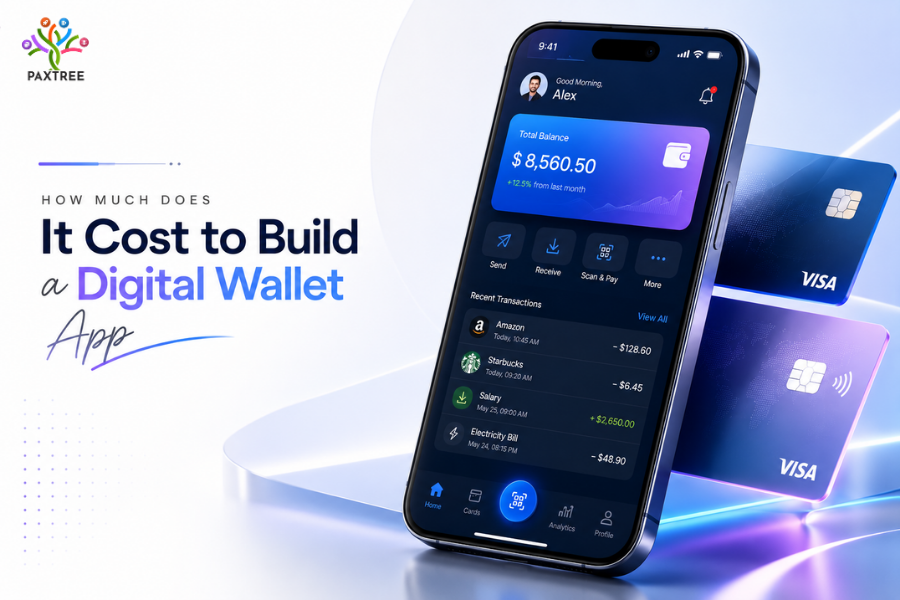
Digital Wallet App Development Cost
Digital wallets have become a core part of modern financial ecosystems.
Consumers increasingly use mobile wallets to make payments, transfer funds, manage balances, and conduct everyday financial activities.
A typical digital wallet application includes:
- Wallet management
- Transaction history
- QR code payments
- Payment gateway integration
- Push notifications
- User authentication
- Security controls
The average development cost for a digital wallet application ranges from R250,000 to R900,000.
However, businesses planning to introduce loyalty systems, merchant payments, international transfers, or multi-currency support should expect higher development budgets.
Real-World Scenario
A startup building a basic wallet application focused on local peer-to-peer payments may enter the market within the lower end of this range.
However, once merchant onboarding, compliance systems, fraud monitoring, and advanced payment functionality are introduced, costs can increase considerably.
The scope of the product ultimately determines the investment required.
Personal Finance App Development Cost
Personal finance applications help users gain better control over their money.
These platforms typically focus on budgeting, expense tracking, savings goals, and financial insights.
Unlike payment-focused solutions, personal finance applications rely heavily on analytics, reporting, and user experience design.
Common functionality includes:
- Expense tracking
- Income monitoring
- Budget management
- Savings goals
- Financial reporting
- Data visualization
The average cost of developing a personal finance application ranges from R300,000 to R1,000,000.
Projects that require banking integrations and advanced analytics often fall toward the higher end of the range.
Payment Processing App Development Cost
Payment applications enable businesses and consumers to move money securely and efficiently.
Because transactions sit at the heart of the platform, security and reliability become major priorities.
A payment processing solution may include:
- Transaction management
- Payment processing
- Merchant tools
- Settlement systems
- Reporting dashboards
- Customer management functionality
Development costs generally range from R400,000 to R1,500,000 depending on infrastructure requirements and transaction complexity.
Lending Platform Development Cost
Lending technology continues to experience strong growth throughout South Africa.
Modern lending applications help automate loan origination, approvals, risk analysis, and repayment management.
Core functionality often includes:
- User verification
- Loan applications
- Credit assessments
- Repayment tracking
- Risk scoring
- Approval workflows
A custom lending platform typically costs between R450,000 and R1,800,000.
The addition of AI-powered underwriting and advanced fraud detection systems can increase overall development costs significantly.
What Factors Influence FinTech App Development Costs?
One of the biggest misconceptions about FinTech software development is that features are the primary cost driver.
While functionality certainly affects development budgets, it is rarely the only factor that matters.
In many projects, security requirements, compliance obligations, third-party integrations, infrastructure planning, and scalability considerations have a greater impact on overall costs than the visible features users interact with every day.
This is why two applications that appear similar on the surface can have vastly different development budgets.
A startup building a payment platform for a niche audience may require a completely different architecture than a company launching a large-scale financial ecosystem designed to support hundreds of thousands of users.
Understanding these cost drivers early allows businesses to make smarter investment decisions and avoid unexpected expenses during development.
Feature Complexity and Business Requirements
The complexity of your feature set has a direct influence on both development costs and project timelines.
A simple MVP designed to validate an idea can often be launched relatively quickly because it focuses on solving a single problem.
However, as additional functionality is introduced, development becomes significantly more complex.
For example, a basic digital wallet might only require user registration, wallet management, payment processing, and transaction history.
A more advanced platform may include:
- AI-powered recommendations
- Fraud detection systems
- Investment tools
- Automated lending decisions
- Multi-currency support
- Merchant management
- Customer support portals
- Advanced analytics
Each new feature introduces additional design, development, testing, and maintenance requirements.
The most successful FinTech companies focus on solving one problem exceptionally well before expanding functionality.
This approach not only reduces initial development costs but also improves product-market fit.
Security Requirements
Security is one of the most significant investments in any FinTech project.
Unlike traditional applications, financial products handle sensitive customer information, payment credentials, identity documents, and transaction records.
A security issue doesn’t simply create technical challenges.
It can damage customer trust, attract regulatory scrutiny, and negatively impact business growth.
Modern FinTech applications typically require:
- End-to-end encryption
- Multi-factor authentication
- Biometric verification
- Fraud detection systems
- Transaction monitoring
- Secure API architecture
- Data protection frameworks
- Role-based access controls
Many founders underestimate how much security contributes to overall project costs.
In reality, security should be considered a core business requirement rather than an optional feature.
Businesses that prioritize security from the beginning often avoid expensive upgrades and platform rebuilds later.
Compliance Requirements
Compliance is another area where many businesses underestimate the level of effort involved.
Building a FinTech application is not only a technology project. It is also a regulatory project.
Depending on the product being developed, businesses may need to consider:
- KYC requirements
- AML procedures
- Payment regulations
- Data protection laws
- Industry-specific compliance standards
- Audit requirements
- Documentation processes
Many first-time founders focus exclusively on product functionality while overlooking how compliance requirements influence architecture decisions from day one.
The earlier compliance is considered, the easier and more cost-effective implementation becomes.
Waiting until the end of development often creates delays, additional expenses, and avoidable technical challenges.
Third-Party Integrations
Very few FinTech applications operate independently.
Most platforms rely on external services to deliver critical functionality.
These integrations often include:
- Payment gateways
- Banking APIs
- Identity verification systems
- Credit scoring providers
- Cloud services
- SMS gateways
- Analytics platforms
- Customer support systems
Every integration introduces additional development effort, testing requirements, and ongoing maintenance responsibilities.
Choosing the right integration partners is often just as important as selecting the right development team.
Reliable integrations improve stability, security, and long-term scalability.
Scalability Planning
A common mistake among startups is designing a platform only for current requirements.
The better question is:
Where will the business be in three years?
An application designed for one thousand users requires a very different infrastructure than a platform supporting hundreds of thousands of active customers.
Scalable architecture requires investment in:
- Cloud infrastructure
- Database optimization
- Performance monitoring
- Load balancing
- Security management
- Automated deployment systems
Although scalability increases initial development costs, it prevents much larger expenses in the future.
The most successful FinTech companies build with growth in mind from the beginning.
FinTech Development Team and Cost Structure
Building a successful FinTech application requires collaboration between multiple specialists.
Many businesses assume development is handled exclusively by software developers.
In reality, successful projects involve experts across planning, design, engineering, testing, security, and project management.
| Team Member | Responsibility |
|---|---|
| Business Analyst | Requirements gathering and product planning |
| UI/UX Designer | User experience and interface design |
| Mobile Developer | Mobile application development |
| Frontend Developer | User-facing functionality |
| Backend Developer | APIs and business logic |
| QA Engineer | Testing and quality assurance |
| DevOps Engineer | Infrastructure and deployment |
| Security Specialist | Security implementation |
| Project Manager | Project coordination |
Every role contributes to the success of the final product.
Attempting to reduce costs by eliminating critical expertise often creates larger problems later.
The most effective approach is building the right team for the complexity of the project.
The FinTech App Development Process
Many businesses request cost estimates before fully understanding the development journey.
Every successful FinTech application follows a structured process designed to minimize risk and maximize quality.
Discovery and Strategy
The discovery phase is where successful products begin.
During this stage, business goals, target users, technical requirements, and growth objectives are defined.
This phase often identifies risks before development starts.
Businesses that invest in proper planning typically save both time and money during later stages.
UI/UX Design
Financial applications must inspire trust.
Users need confidence when managing money, making payments, or sharing personal information.
A strong user experience can significantly influence adoption rates and customer retention.
This stage focuses on:
- User journeys
- Wireframes
- Interactive prototypes
- Interface design
- Usability optimization
The quality of the user experience often has a direct impact on product success.
Development
Development is usually divided into frontend and backend engineering.
Frontend development focuses on what users see and interact with.
Backend development handles:
- Business logic
- Databases
- Security systems
- Payment processing
- Integrations
- Infrastructure
This phase often represents the largest portion of the project budget.
Testing and Quality Assurance
Testing is especially important in financial software development.
Even minor errors can impact customer trust and business operations.
Comprehensive testing helps identify:
- Performance issues
- Security vulnerabilities
- Usability challenges
- Integration problems
- System reliability concerns
Thorough testing significantly reduces launch risks.
Deployment and Launch
Once testing is complete, the application moves into production.
Deployment involves:
- Infrastructure setup
- Security validation
- Performance optimization
- Monitoring configuration
- Launch preparation
Many businesses think development ends here.
In reality, launch is only the beginning of the product lifecycle.
Hidden Costs Most Businesses Overlook
One of the biggest reasons FinTech projects exceed budgets is because businesses focus only on development costs.
The reality is that successful applications require ongoing investment.
Cloud Infrastructure Costs
As user numbers increase, infrastructure requirements grow.
Cloud hosting expenses depend on:
- Storage requirements
- Traffic volume
- Transaction activity
- Server resources
- Security services
Planning for infrastructure growth helps avoid unexpected costs later.
Security Audits
Security is not a one-time activity.
Regular audits help identify vulnerabilities before they become serious issues.
Ongoing security investments protect both the business and its users.
Third-Party Service Costs
Many integrations charge monthly or usage-based fees.
These may include:
- Identity verification providers
- Payment gateways
- SMS services
- Banking APIs
- Analytics platforms
Businesses should consider these ongoing expenses during budgeting.
Product Enhancements
User expectations evolve constantly.
Successful FinTech products continuously improve features, performance, and customer experiences.
Ongoing innovation often becomes a competitive advantage.
Maintenance and Support
Most businesses allocate between 15% and 25% of the original development budget annually for maintenance and support.
This investment helps keep the platform secure, reliable, and competitive.
Common Mistakes That Increase FinTech Development Costs
After working with startups and enterprises across different industries, several common patterns appear repeatedly.
These mistakes often increase costs unnecessarily.
Building Too Many Features Too Early
Many founders attempt to launch with every feature imaginable.
This approach increases costs, delays launches, and often creates unnecessary complexity.
The most successful products start focused and expand gradually.
Ignoring Compliance Until Later
Compliance should influence architecture decisions from the beginning.
Treating compliance as a final-stage task often creates expensive rework.
Choosing the Cheapest Development Option
Low-cost development can seem attractive initially.
However, poor architecture, weak security, and technical debt often result in significantly higher costs later.
Neglecting Scalability
A platform that cannot grow with the business eventually becomes a limitation.
Planning for scalability early is usually more affordable than rebuilding later.
Skipping Discovery and Planning
Many costly mistakes occur because businesses rush directly into development.
Strong planning often prevents months of unnecessary work.
A Real-World Startup Example
Imagine a startup launching a digital lending platform in South Africa.
The founders initially plan for a simple MVP with user registration, KYC verification, loan applications, approval workflows, and repayment tracking.
The initial budget may fall between R350,000 and R900,000 depending on complexity.
As the platform grows, additional requirements emerge:
- AI-powered credit scoring
- Fraud detection systems
- Banking integrations
- Automated underwriting
- Advanced reporting
- Customer self-service tools
At this stage, development costs increase because the platform evolves from a simple MVP into a scalable financial ecosystem.
This is why understanding long-term product goals is so important during the planning phase.
What Most Businesses Underestimate About FinTech Development
When discussing FinTech app costs, most conversations focus on development budgets.
In reality, development is only one piece of the puzzle.
The true challenge often lies in balancing:
- Security
- Compliance
- Scalability
- Customer experience
- Integrations
- Long-term maintenance
Businesses that understand this reality early tend to make better investment decisions and build stronger products.
The most successful FinTech platforms are not necessarily the ones with the largest budgets.
Why Businesses Choose Custom FinTech App Development
When planning a FinTech product, many businesses face an important decision.
Should they invest in custom software development or choose an off-the-shelf solution?
At first glance, pre-built platforms often appear faster and more affordable. However, as businesses grow, these solutions frequently become restrictive. Limited customization, scalability challenges, integration constraints, and security concerns can create roadblocks that impact long-term growth.
Custom FinTech app development provides businesses with complete control over their product, technology stack, user experience, and future roadmap.
Instead of adapting business processes to fit existing software, organizations can build solutions tailored specifically to their goals.
This flexibility becomes especially valuable in financial technology, where customer expectations, regulatory requirements, and market conditions continue to evolve rapidly.
Businesses investing in custom development gain the ability to innovate faster, differentiate themselves from competitors, and create stronger customer experiences.
Benefits of Custom FinTech App Development
Custom development is not simply about building software.
It is about creating a long-term business asset.
A well-designed FinTech platform provides several advantages that generic solutions often cannot match.
Enhanced Security
Financial applications manage highly sensitive information.
Custom-built platforms allow businesses to implement security frameworks that align with their specific requirements rather than relying on generic security configurations.
Better Scalability
As user numbers increase, custom applications can scale alongside the business.
This reduces the likelihood of expensive platform migrations or infrastructure limitations in the future.
Greater Flexibility
Custom software gives businesses complete control over features, integrations, workflows, and user experiences.
This flexibility makes it easier to adapt to changing customer demands and market opportunities.
Competitive Differentiation
In a crowded FinTech market, unique experiences matter.
Custom development allows businesses to create products that stand out rather than offering the same functionality as competitors.
Long-Term Return on Investment
While custom development often requires a larger initial investment, it frequently delivers greater long-term value through scalability, efficiency, and ownership.
Why Businesses Choose Paxtree for FinTech App Development
Building a successful FinTech product requires more than technical expertise.
It requires a deep understanding of financial systems, security requirements, compliance considerations, and customer behavior.
At Paxtree, we help startups, enterprises, and financial organizations transform innovative ideas into secure, scalable, and user-focused digital products.
Our approach combines strategic planning, modern technologies, robust security practices, and business-driven development methodologies.
Rather than focusing solely on development, we work closely with clients to understand their objectives, identify opportunities, and create solutions that support long-term growth.
Whether you’re building a digital wallet, lending platform, payment gateway, investment application, insurance technology product, or custom financial software solution, our team focuses on delivering products that balance functionality, performance, and user experience.
Our goal is not simply to launch applications.
Our goal is to build products that create measurable business value.
Future Trends Shaping FinTech App Development
The financial technology landscape continues to evolve at an extraordinary pace.
Businesses planning new products today should also consider how future innovations may influence customer expectations and development strategies.
Artificial Intelligence
AI is rapidly becoming a core component of modern FinTech products.
From fraud detection and customer support automation to financial forecasting and investment recommendations, AI-powered functionality is creating new opportunities for businesses and consumers alike.
Open Banking
Open banking initiatives are enabling deeper integrations between financial institutions and third-party applications.
This creates opportunities for richer customer experiences and more personalized financial services.
Embedded Finance
Businesses outside the financial sector are increasingly integrating financial services directly into their products.
This trend is expanding the reach of FinTech beyond traditional banking environments.
Blockchain Technology
While blockchain adoption varies across industries, it continues to influence areas such as digital payments, identity verification, transaction security, and decentralized finance.
Hyper-Personalization
Consumers increasingly expect financial experiences tailored to their individual needs.
Data-driven personalization is becoming a key differentiator for modern FinTech applications.
Organizations that prepare for these trends today are often better positioned for long-term success tomorrow.
Frequently Asked Questions
How much does it cost to build a FinTech MVP?
A basic FinTech MVP generally costs between R180,000 and R450,000 depending on functionality, integrations, and security requirements.
How much does a digital wallet app cost?
Digital wallet development typically ranges from R250,000 to R900,000 depending on complexity and payment infrastructure requirements.
How much does it cost to develop a lending platform?
Custom lending platforms often range between R450,000 and R1,800,000 depending on automation, integrations, and risk assessment features.
What is the cost of building a mobile banking application?
Mobile banking solutions usually require investments ranging from R1,200,000 to R5,000,000 or more.
How long does FinTech app development take?
Development timelines generally range from three months for an MVP to eighteen months or longer for enterprise-grade financial platforms.
What technologies are commonly used in FinTech development?
Popular technologies include Flutter, React Native, Node.js, Python, .NET, AWS, Azure, PostgreSQL, and cloud-native architectures.
What is the biggest cost factor in FinTech development?
Security implementation, compliance requirements, third-party integrations, and backend infrastructure are typically the largest contributors to overall costs.
Is custom FinTech development better than white-label solutions?
For businesses focused on long-term growth, custom development usually provides better flexibility, security, scalability, and ownership.
How much does FinTech app maintenance cost?
Annual maintenance costs often range between 15% and 25% of the original development budget.
Can startups build FinTech products with limited budgets?
Yes. Many successful FinTech startups begin with a focused MVP before gradually expanding functionality based on market demand and user feedback.
Final Thoughts
Building a FinTech application is about much more than estimating development costs.
It is about creating a secure, scalable, and future-ready platform capable of supporting business growth in an increasingly competitive digital economy.
While costs can range from R180,000 for a focused MVP to several million rand for enterprise-grade financial platforms, the most important factor is ensuring the investment aligns with long-term business objectives.
The businesses that succeed in FinTech are rarely those that spend the least.
They are the organizations that make strategic technology decisions, prioritize customer trust, invest in security, and build products designed to scale.
Whether you’re launching a digital wallet, lending platform, investment application, payment solution, or mobile banking product, understanding development costs is the first step toward making informed decisions and maximizing return on investment.
If you’re planning a FinTech product and want expert guidance on strategy, architecture, development, and scalability, partnering with an experienced FinTech app development company can significantly increase your chances of success.