Mobile App Development
If you sit down with a few founders in Cape Town or Johannesburg, the conversation usually circles back to the same thing… cost vs speed. Not features. Not tech stack. Just – how fast can we build, and how much is this going to cost us?
That’s where Flutter enters the picture. It’s not some magic solution. But it does solve one very practical problem. You don’t need separate teams for Android and iOS. One codebase, both platforms. Less time, fewer moving parts.
And yes, lower cross-platform app development cost. Not always obvious. A small retail business we spoke to recently wanted a simple ordering app. Initially, they assumed they’d need two versions. Once they understood Flutter, the budget conversation changed almost immediately.
That’s why more businesses looking to hire Flutter developers in South Africa are leaning toward it. It just makes financial sense in many cases.
What Actually Affects Flutter App Development Cost
Let’s not overcomplicate this. The Flutter app development cost depends on decisions. Not just development hours.
This is where things change.
You might think it’s about “how big the app is.” That’s part of it. But honestly, it goes deeper.
Start with the developer. A junior developer may cost less per hour. But if they take longer or miss key things, you’re not saving money. You’re just delaying the problem. A senior developer? Higher rate, yes. But faster output. Fewer mistakes. Cleaner structure.
Sounds simple. It isn’t.
Now the app itself. Say you’re building a delivery app. At first, it sounds straightforward:
- Login
- Product list
- Checkout
But then…
- Live tracking
- Push notifications
- Payment integration
- Admin panel
Suddenly, it’s not a “simple app” anymore. This is usually where budgets shift.
Also – the hiring model matters:
- Freelancer
- Agency
- Dedicated developers
Each one changes how your project moves. Speed, communication, accountability… everything. Most people miss this part.
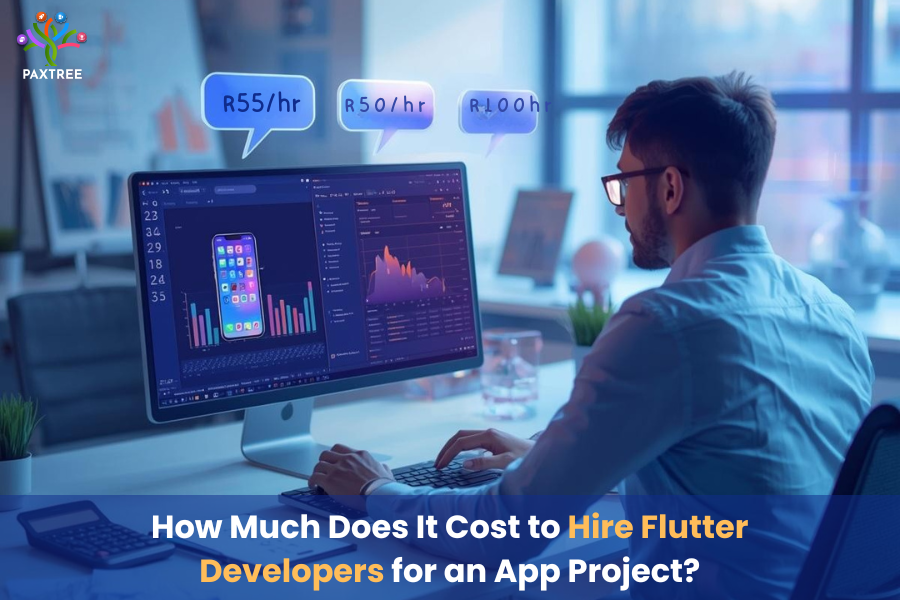
Flutter Developer Hourly Rate South Africa
Let’s get into numbers. Because this is usually the first thing people ask.
Hourly Rate Overview
| Level | Hourly Rate |
| Junior | R150 – R300 |
| Mid-level | R300 – R600 |
| Senior | R600 – R1000+ |
Now here’s the catch. People focus too much on the hourly rate. But what actually matters is how long the job takes.
A senior developer might finish something in one day that takes a junior three. So even at a higher rate, the total cost can be similar… sometimes even lower.
And yes, this matters more than it seems.
Most businesses that hire Flutter App developers in South Africa end up with a mix:
- Mid-level → execution
- Senior → oversight
That combination tends to work well.
Cost to Build Mobile App in South Africa (By App Type)
Let’s bring this down to real numbers. Because at some point, you need a rough idea of the cost to build mobile app South Africa.
Cost Breakdown Overview
| App Type | Cost Range | Complexity |
| Basic | R80k – R180k | Simple features |
| Medium | R180k – R400k | Moderate complexity |
| Advanced | R400k – R900k+ | High complexity |
Basic App (R80,000 – R180,000)
Think small. A booking system for a salon. Or a simple internal tool.
- Minimal features
- No complex backend
We worked with a local service provider who built a basic appointment app in this range. Nothing fancy – but it worked. And that was the goal.
Medium Complexity App (R180,000 – R400,000)
Now you’re adding real functionality.
For example:
- Service marketplace
- Food ordering app
You’ll likely need:
- Payments
- Notifications
- Admin dashboards
- API integrations
More logic. More testing. More coordination. This is where the Flutter app pricing guide becomes useful – because things are no longer “simple.”
Advanced App (R400,000 – R900,000+)
This is where things get serious.
Think:
- Fintech platforms
- Real-time logistics apps
- Systems with real-time updates
We had a fintech client who initially thought their app would cost under R300k. But once compliance, security, and integrations came in… the scope doubled.
Not unusual. This is usually where budgets shift again.
Freelancer vs Agency vs Dedicated Developers
Let’s be honest here. Freelancers can work – for small, well-defined projects. But once complexity increases…
- Deadlines slip
- Communication gaps appear
- Availability becomes inconsistent
And this is where things change again.
Hiring Model Comparison
| Type | Best For | Limitations |
| Freelancer | Small projects | Availability issues |
| Agency | Full projects | Higher cost |
| Dedicated Developers | Long-term projects | Needs management |
Agencies bring structure:
- Teams
- Processes
- Reliability
You pay more, but you get consistency.
Then there’s dedicated developers. This is where many businesses in South Africa are heading.
You get:
- Consistent focus
- Better communication
- Scalability
Without the overhead of hiring in-house. If you’re planning long-term, this is often the smarter way to hire mobile app developers South Africa.
Hidden Costs You Should Know Before You Start
This is the part people usually don’t plan for. And it adds up.
UI/UX Design
Good UI/UX improves user experience. Bad design? Users leave. Simple as that.
Maintenance
Apps need:
- Updates
- Fixes
- Improvements
Expect around 15-20% of your initial cost annually. Not small.
Third-Party Tools
- Payment gateways
- SMS services
- Analytics platforms
Individually minor. Together… not so minor.
How to Reduce Flutter App Development Cost Smartly
Everyone wants to reduce cost. That’s obvious. But cutting blindly usually backfires.
Start with an MVP
- Build the core
- Launch
- Learn
Don’t try to build everything at once. We’ve seen businesses delay launches for months trying to “perfect” their app. Most of those features weren’t even used.
Keep Requirements Clear
If your requirements keep changing mid-project, costs go up. Not because developers are overcharging… but because rework takes time.
Avoid Overbuilding
Not every feature needs to exist on day one. If you’re unsure where to start, sometimes just talking things through helps.
A quick conversation with Flutter experts can save weeks of confusion.
Choosing the Right Flutter App Development Company South Africa
This decision matters more than the price. A good Flutter app development company in South Africa doesn’t just build what you ask. They question it:
- Why this feature?
- Why this flow?
- Is this really needed right now?
Also – communication. If things feel unclear or slow early on, that’s usually a sign. Don’t ignore it. Compare thinking, not just pricing.
Why Businesses Choose Paxtree
At Paxtree, the focus isn’t just development. It’s understanding.
- What you actually need
- What you don’t
Helping businesses avoid unnecessary complexity early – that’s where most savings happen.
There’s also a strong understanding of how the South African market works:
- User expectations
- Business challenges
If you want a clearer idea of cost, getting a quick estimate based on your app usually helps more than guessing.
And if you’re ready, you can hire Flutter app developers in South Africa who understand both the technical and business side.
Final Thoughts (Conclusion)
So… how much does it cost?
It depends.
But now you know what it depends on:
- The app
- The team
- The decisions
Flutter helps manage cross-platform app development cost, but the real impact comes from how you approach the project.
Plan smart. Start small. Adjust as you go. That’s usually what separates successful apps from expensive mistakes.
FAQs
How much does it cost to hire Flutter developers in South Africa?
It varies quite a bit. You might pay anywhere from R150/hour to over R1000/hour. But honestly, the total project cost matters more than the hourly rate.
What is the Flutter developer hourly rate in South Africa?
Most developers fall between R150 and R600/hour. Senior developers can go higher depending on experience and complexity.
Is Flutter cheaper than native app development?
In many cases, yes. Since you’re building one codebase instead of two, development and maintenance costs are usually lower.
How long does it take to build a Flutter app?
A basic app might take 1–2 months. More complex ones can take 4–8 months or longer. It really depends on what you’re building.
Should I hire freelancers or a Flutter app development company in South Africa?
Freelancers work on smaller tasks. But for long-term or complex apps, working with a Flutter app development company in South Africa or a dedicated team tends to be more reliable.